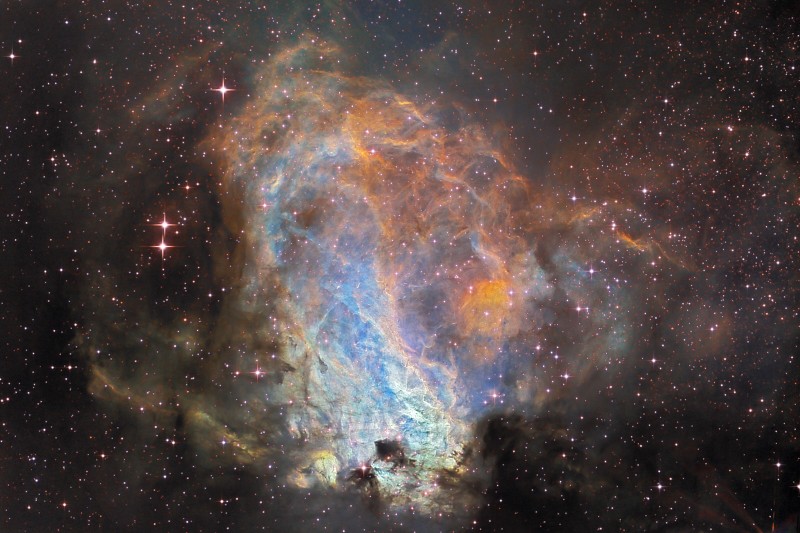
General Composition and Effects
So, what actually is Interstellar Medium? Sometimes abbreviated as ISM, Interstellar Medium is the term used to describe the large and spacious coagulations of gas and dust particles, floating together in free space. These microscopic gas and dust particles typically come in the for of atomic Hydrogen (H, AKA a proton), the heavier H2 molecules, or Helium (He) atoms, but this is not an exhaustive list, and soon you will come to study the more extraneous molecular formations in ISM.
Composition & Formation
An important distinction to make in the description of the composition of ISM is the difference between gas and dust particles.
Gas particles are significantly smaller than dust particles, usually ranging between 1 micrometer to 1 nanometer in radius. Gas particles are typically H or He atoms or H2 molecules(H being the most common atom in the universe), and compose 99 percent of all the mass in ISM.
Dust Particles, on the other hand, are typically greater than 1 micrometer to 1 cm in radius. Dust particles are usually rarer and heavier molecules and elements with higher atomic radii (see periodic table) such as carbon monoxide (CO), sodium (Na), silica (Si), graphite (carbon, C, polymorph) and icy volatiles such as H2O. Dust particles account for 1 percent of all mass in the ISM.
The chemically diverse mixtures of both gas and dust particles is what defines the classification of some different types of ISM, which we will explore in greater detail in the later sections of Chapter one.Now that you have a basic understanding of what composes ISM, it is time we dive straight into how they are formed.
Interstellar medium, as with all matter in the universe, enacts its own gravitational force on the matter around it. More specifically, as the dust and gas particles dispersed in space drift and float in space, each particle has its own, infinitesimally small gravitational and weak electrostatic force that attracts and repulses the other gas and dust around as they move around. As a side note, You may recall from your high school chemistry class the affects of electro-negativity and electron affinity–they still apply in space and aid these pulling forces. In the vast spaces in between stars and whatever else, there are trillions upon trillion gas and dust particles floating around in close proximity such that their collective attractive forces act to keep them loosely bind together in large, blob-like formations. The specific forces acting to create and contain interstellar medium formations can be enumerated as such:
Gravitational Forces: As discussed in the previous section, each gas and dust particle each has their own individual gravity as a result of their own small atomic mass. When considering all particles in an ISM cloud, the net gravitational force acts inward, very so slightly compressing the cloud closer together as one huge mass.
Spin: Each ISM cloud slowly rotates about its center, most dense region of mass. Think of like our earth or sun and how it rotates, just at a significantly slower rate. Due to the conversation of angular momentum, as a body grows in mass or shrinks in radii, its angular velocity, or the speed at which it is rotating, increases to maintain, or "converse," its original momentum. In the case of ISM, the mass is constant and the mass as an innate spin due to the sum of the smaller gravitational and electrostatic forces at play. To converse angular momentum, thus the ISM cloud spin enacts an outward force to increase the radii, fighting against the force of gravity. Questions on how the conversation of angular momentum is applied to ISM are incredibly common, so it is imperative that you take external notes on this topic.
Magnetic field: Due to the net electronic charge of the elements of the ISM cloud, the cloud has its own, albeit quite weak, magnetic field. This magnetic field enacts a net inward force, alongside gravity, against spin/conversation of angular momentum
Before we move on into a more in depth look into the specific properties and types of ISM, we must first obtain a basic understanding of where the hell any of this ISM even came from?
In the previous explanation of the general composition of ISM, we cited that atomic hydrogen, H, is the most abundant element in the universe. How could this universal condition came to be? On a local level, i.e. in the recent few billion years of the universe, Hydrogen is used as the primary fuel of the grand majority of stars. Thus, when stars die, they eject their envelopes deep into space, eventually coalescing to the ISM clouds and formation that we know of. The origin of the H atom itself goes back to a period in the universe’s early life called Big Bang Nucleosynthesis where the the universe’s size grew significantly enough to cool down the average kinetic energy (AKA temperature) to a point where small, gaseous atoms like Hydrogen and Helium could form. A more in-depth look into Nucleosynthesis will be featured in the Cosmology Chapter of Module one.
Extinction
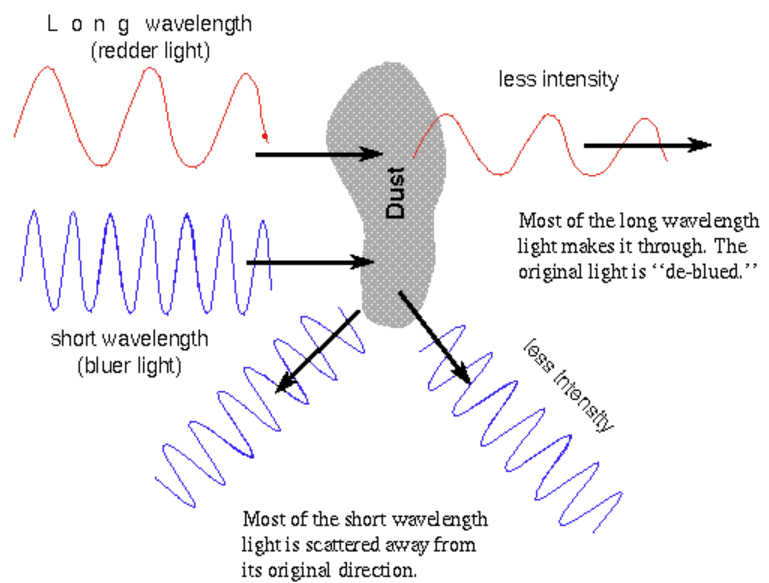
Continuing our investigation into the properties of ISM, we must be sure to cover one of the most important quality of ISM to astronomers: extinction.
So what even is extinction? Extinction, in short, is the reddening effect that ISM has on light passing through to reach an observer. This happens due to the absorption of shorter wavelengths of radiation of ISM, determined by the size of the gas and dust particles. ISM gas and dust, being down to the magnitudes of nanometers in length, are similar in size to many lower wavelengths of light (radiation) in the visual spectrum, such that when the light from a star passes through the ISM over long distances, these shorter-wavelengthed waves collide with the dust particles, heating the dust and absorbing the radiation. This causes radiation with longer wavelengths to be the dominant light to pass through the ISM. For those unfamiliar with the Electromagnetic Spectrum, as wavelengths decrease in size in the visual region of the spectrum, light appears to be bluer, and as wavelengths increase, light appears to be redder.
Heating, Cooling, and Temperature Equilibrium
Like all matter in the universe, ISM is subject to the effects of changing temperature, which can, when observed from earth, can offer astronomers clues into the composition and energy state of the ISM itself.
To begin our understanding of how ISM interacts with Temperature, we must first enumerate the space phenomena that commonly cause ISM to increase in temperature, AKA Heating Mechanisms:
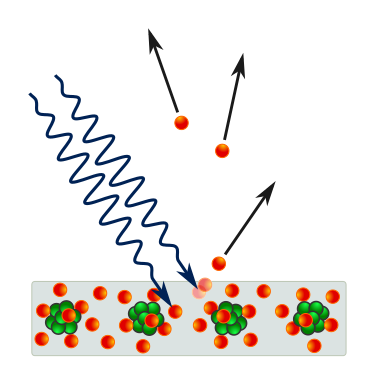
Photoelectric Effect: This effect is the most significant and common heating source for ISM. the photoelectric effect occurs when a certain atomic/molecular substance emits electrons as a result of Ultraviolet (UV) waves colliding and being absorbed by the substance. These ejected electrons, called photoelectrons, shoot off from their electron orbitals and interact with other surrounding particles, transferring their kinetic energy to the particles which increases their temperature (sidenote: temperature = average kinetic energy) An example of a similar effect is seen in ISM extinction. The radiation that causes the photoelectric effect typically comes from a nearby star.
Low-energy Cosmic Ray heating: Similar to the photoelectric effect, Cosmic ray heating results from a collision between the ISM particles and another substance, only in Cosmic Ray heating, unlike the Photoelectric effect, the external substance is high-energy protons and atomic nuclei ejected at high speeds from outer sources in space like supernovae, active galactic nuclei, and other cosmic explosion events like novae. When these high speed protons and nuclei are shot into space by the immense forces of cosmic explosions and collide with the gas and dust particles of ISM, the transfer of Kinetic energy from the protons to the ISM particles exceeds the ionization energies of the ISM atoms, thus ionizing and exciting them to a higher energy state and releasing heat energy excess to the surrounding gas in the process.
X-Ray Heating: X-ray heating occurs when the energy transfer from X-rays hitting the ISM particles to the particles themselves remove electrons from the particles, which then eventually collide with other particles to heat them and possibly cause a secondary ionization. X-ray heating thus is more common as an effect in denser ISM clouds. The source of the X-Rays are from young stars and supernova remnants (abbreviated SNR, more on SNRs later this chapter). item Photoionization: Photoionization is often a part of and closely related to the Photoelectric effect. Photoionization occurs when incoming UV radiation removes an electron from a gas particle, thus removing the gas particle’s KE and adding it to the local system of particles, increasing its temperature.
Exothermic Reactions: When ISM is at the critical density such that the formation of complex molecules can occur, molecules like H2 form from 2 gaseous Hydrogen atoms in a exothermic reaction (i.e. heat is a product of the reaction and is released on its completion). In the example with H2 molecules, its formation releases 4.48 eV, which is release as kinetic energy to the H2 molecule, thus heating up the gas. This is true for all exothermic formation reactions in ISM. Additionally, the de-excitation of electrons that occurs during the formation process also releases heat energy.
Grain-gas Heating: This effect is significantly less common than all the effects above. Grain-gas heating occurs when two ISM particles collide without a exterior input of energy, transferring their kinetic energy, increasing temperature.
In contrast to the heating mechanisms explained above, we can also enumerate the space phenomena that decrease the temperature of ISM, AKA Cooling Mechanisms:
Fine Structure Cooling: Fine structure cooling is the most predominant cooling mechanism in ISM clouds, and related to Grain-gas heating. Fine Structure cooling occurs when the frequent collision of ISM particles, although causing an initial heating effect (see above) that excites the atoms to higher energy levels, eventually will result in the subsequent de-excitation of the atoms through photon emission (atoms release photons when returning to ground state), ejecting energy out of the system in the released photon. Fine structure cooling is most common in certain types of ISM clouds called HII regions, where atoms with fine structure levels like C II, O I, O II, O III, N II, N III, Ne II, and Ne III, can be found (a more in-depth look into HII regions can be found later in this chapter).
Cooling by Permitted Lines: this cooling mechanism often acts as a compound effect with fine structure cooling and various other effects like rely on the de-excitation of ISM particles. Cooling by Permitted Lines occurs specifically when the gas is a lower temperatures, which allows for more electron orbital levels to be excited by collisions and therefore more levels can be de-excited to release more photon energy out of the system following many collisions. As each level is de-exited, energy is lost.
Bremsstrahlung Cooling: This effect is most common in high temperatures, where ionized atoms are more common. Bremsstrahlung cooling occurs when hot, ionized gas loses energy via the emission of radiation when they deflect charged particles like electrons.
Dust Cooling: This effect is especially common in molecular clouds, a type of ISM with high densities and high concentration of molecular dust particles. Dust cooling occurs when a dust particle absorbs energy (can be from a variety of different heating mechanisms enumerated above) and slowly radiates that energy back out of the system as thermal energy. This energy loss is propagated by the large surface area of dust grains (0.01 to 0.1 micrometers typically in molecular clouds) which speeds up the radiating of thermal energy (sidenote: this can actually be mathematically proved by the Steffan-Boltzman Law!! More in Module Two). Dust Cooling carries great significance in the study of star formation because it functions to create regions in ISM of cold, dense cores, which are the optimal environments for the start of a star’s formation.
Recombination Cooling (AKA reduction reactions): Recombination cooling is the process where the temperature of an ISM cloud decreases as a result of free electrons, which are ejected by Photoionization, recombining with ions to form neutral atoms. This neutralization process bring the ions to a lower energy state than before as the atom gains an electron and thus absorbs heat energy and transforms it into chemical energy. The process in which ions gain electrons is known in chemistry as reduction, whereas oxidation is the loss of electrons
Both heating and cooling mechanisms occur simultaneously in ISM clouds and thus maintain a balance known as Thermodynamic Equilibrium. This is one of the most important concepts in Scioly Astro (especially in the math section). Thermodynamic equilibrium is the state of a system where there is no net change/flow of energy into and out of the system. In other words, this means that the energy gained by the system through heating mechanisms equals the energy lost by the system through cooling mechanisms (given heat = energy). All systems in the long term will balance themselves to reach thermodynamic equilibrium, and for many calculations of temperature (i.e. planets and stars) assume the system is at "Temperature equilibrium", with no net change in energy.
Phew... That was a lot of random information. Luckily, if you have been taking good notes, you will be completely set for all ISM questions, which for the past two years have been incredibly common on MCQ and FRQ sections of Scioly Astro tests (especially at PA States, for those reading from PA). We will now move on to explain the distinct types of ISM and its role in the formation of stars, two of possibly the most prevalent and important ISM topics in Scioly Astro.
Molecular Clouds
Molecular clouds are one of the most common types of ISM formations in our universe, and have properties that are integral to our understanding of stars, ISM, and our universe itself. Here is what you need to know about Molecular Clouds for Scioly Astro:
General Properties
In short, molecular clouds are thick ISM clouds that have both the density and size to permit (1) absorption nebulae, (2) the formation of molecular H2, and the formation of HII regions. But what do each of these 3 criterion even mean? Lets break it down.
(1) Absorption Nebulae: Absorption Nebulae, AKA Dark Nebulae, is a subtype of molecular cloud that describes a region of ISM so dense that the thick gas and dust obscure all visible wavelengths of light (ex. stars or emission nebulae). These are some of the coldest regions of ISM and our universe. The ability to have Absorption Nebulae is important for the classification of molecular clouds because it functions as a requirement for the high densities which give molecular clouds their distinct properties
(2) The formation of molecular H2: as expressed in the "molecular" of molecular clouds, molecular clouds must be able to maintain temperatures sufficiently low to facilitate the formation of molecular hydrogen, which happens to be approximately 10 K (K being Kelvin, the Standard unit for Temperature; more on standard units in Module 2). These low temperatures must be sustained by cooling mechanisms like dust cooling and result in the unique chemical composition of molecular clouds, both of which give molecular clouds their distinct properties.
(3) The formation of HII regions: HII regions, in short, are smaller regions of ISM inside of molecular cloud where star formation has resulted in high temperatures and the widespread ionization of hydrogen. HII regions can only form in molecular clouds when the cloud is (1) sufficiently massive (usually ‘10x to 10,000,000x the mass of our sun) and (2) sufficiently large in radius (0.01 parsecs to 200 parsecs in radii). Both the requirements for mass and size give molecular clouds their distinctive star-forming property.
From these 3 simple requirements, we have derived the distinctive physical qualities of molecular clouds: high mass, high radius, molecular composition, low temperatures, and high densities. From these general traits, we can begin to investigate further how they specifically interact with the chemistry, formation, and detection of molecular clouds.
Structure and Chemistry
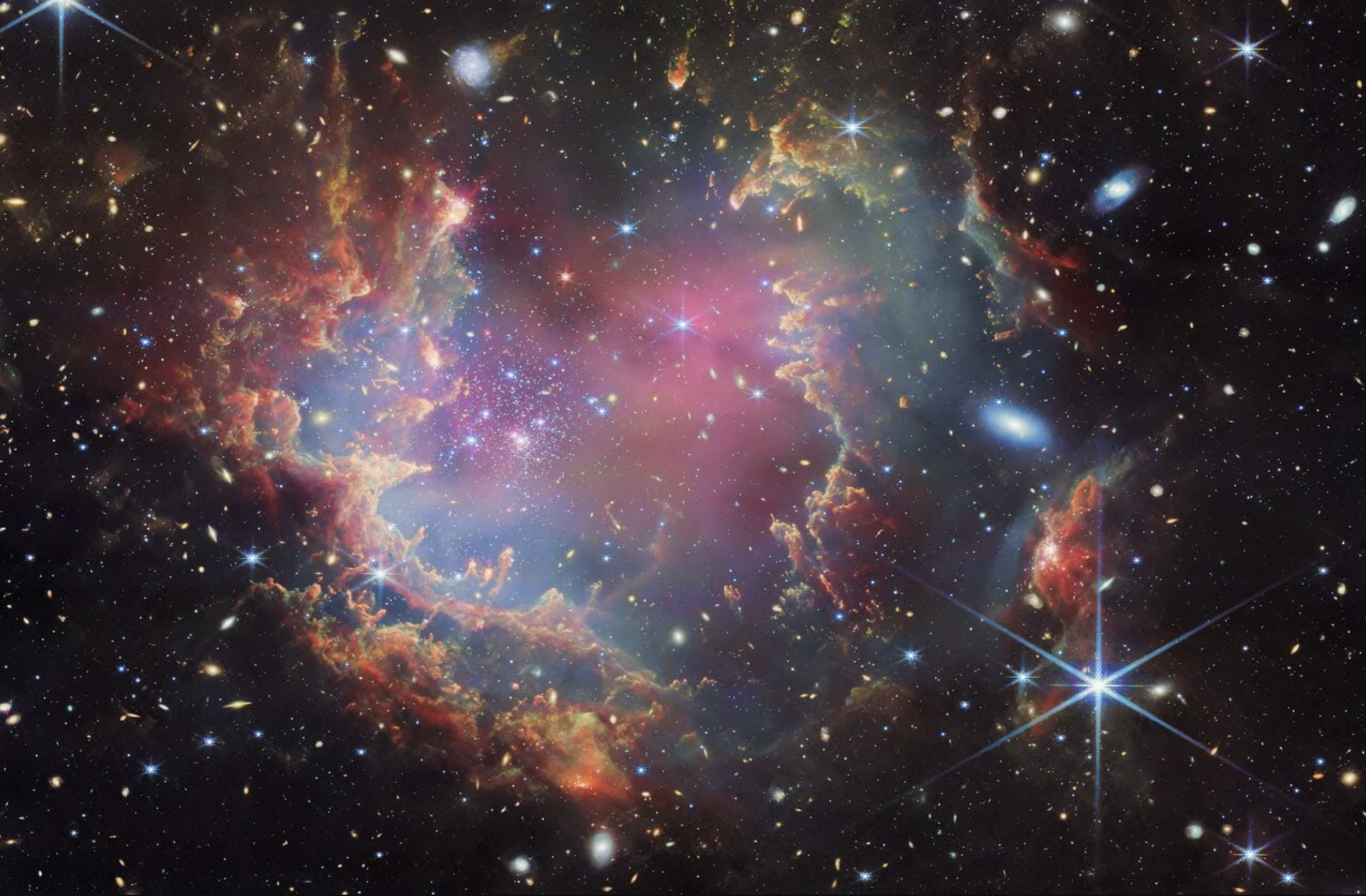
First understanding the structure of molecular clouds is important in beginning to grasp the origin of its properties. Firstly, as you travel deeper and deeper into a molecular cloud, the gas and dust regions become denser and denser, especially as you reach the core, which is so dense that no visual light can pass through. Although temperature varies from less dense regions to more dense regions, the overall average temperature for molecular clouds is 10 K (this is the answer to many common MCQs in Scioly Astro, be sure to right the temperatures down!).
The internal structure of the molecular cloud is divided between regions of lower densities and, more notably, smaller regions of high densities called Gas Cores. Regions where there is an abundance of the Gas cores in one location are called Clumps. These clumps are important because they serve as the origin site of many of today’s stars, as we will discuss further in Chapter two. Clumps are typically 1 parsec in diameter and constitute larger structures in the cloud, whereas Cores are smaller by a factor of ten and are typically more dense by volume than clump formations. Densities within molecular clouds typically range between 10 and 30 cm^3, and although they only account for less than 1 percent of all ISM, they constitute approximately 50 percent of all interstellar gas (NOT medium, which includes other materials in ISM).
Along with their densities and internal structure, molecular clouds additionally have nuanced external structure as well. The external form of molecular clouds is primarily shaped by UV radiation, which when in contact with ISM, can dissociate the larger molecules in the gas into thinner, smaller atoms if sufficiently strong. This effect creates the beautiful curves, pillars, and filaments commonly associated with optical/composite images of molecular clouds on the internet today. ISM Dust can provide a shielding effect to the molecular gas particles, but this is not strong enough to evade the UV radiation from a close-by source like a young star. Thus the shape of a molecular cloud is much determined by the intensity of the source (distance from cloud considered), the composition of the cloud, and the general movement of the molecular cloud itself.
Another noteworthy force that determines the external form of a molecular cloud is its weak magnetic field. The magnetic field of a molecular cloud induces turbulence on the gas and dust inside the cloud and can thus lead to the formation of dense filaments and eventually the onset of star formation.
As we know, molecular clouds are primarily composed of molecular hydrogen, H2. However, molecular clouds also contain a variety of other molecular compounds which are each significant in their own right. For example Carbon monoxide, CO, is the second most prevalent molecule in molecular clouds. Other molecules that form in the low temperatures of molecular clouds include long chain compounds like methanol, ethanol, benzene rings, and several hydrides. One of the most distinctive of the long chain compounds in molecular clouds are polycyclic aromatic hydrocarbons, which are sometimes used for characterization purposes.
Astronomers on earth use the unique composition and radiation emission of molecular clouds in order to detect and model them in space. From earth, astronomers most often use radio waves, deemed the "21 cm line" because of the specific wavelength of radio emitted by molecular clouds (also at a frequency of 1420.4 MHz; remember these two numbers for MCQ). The emission of the 21 cm line is caused when the spin of the proton and electron of hydrogens in H2 transition from being parallel to antiparallel in spin, emitting radio waves. Additionally, astronomers also use a secondary method to detect molecular clouds: CO molecule detection. Using the unique emission line spectrum of CO, astronomers are able to conclude the percent composition and concentration of CO molecules in the regions of molecular clouds. Using this data, astronomers are able to, especially in our local Milky Way galaxy, determine the concentration of H2 molecules in the cloud and thus the mass of the cloud because the ratio between CO luminosity and H2 mass is thought to be constant in our galaxy.
Following this section, you may ask why don’t astronomers just detect H2 molecules instead of going through the hassle of the 21 cm and CO molecule tests? Simply put, H2 molecules are a structurally suboptimal for emission line spectrum detection at long distances. Namely, H2 molecules, unlike the polar CO molecules, are symmetrical, which means that their spectral lines are weaker due to their stronger, electrostatically stable covalent bondage. This structural inefficiency results in a paucity of H2 emission spectra detections from molecular clouds.

The final installment to our discussion of the structure and chemistry of molecular clouds are the composition of stars that occur in inside and around molecular clouds. The hottest, most massive stars, typically of type O and B (see the Harvard Classification system discussed in Chapter 3 for more details), typically dominate the internal structure of molecular clouds. Their high UV and X-Ray emission function to increase the temperature using the Photoelectric effect and X-ray heating, as well as carve the shape of the molecular cloud via Photoionization. These stars belong to a classification named Population I, which designates stars of recent birth (formed in the last approximately 7 billion years, later universe) that are composed of high concentrations of elements heavier than H and He (AKA high metallicity). Additionally, molecular clouds are home to high abundances of young stars still in the process of formation, named T Tauri stars, which offer a secondary source of X-Ray emission.
Formation and Destruction
Despite their massive sizes and tremendous mass reservoirs, molecular clouds only account for less than 1 percent of all ISM in our universe. Even more fascinating, although they only account for 1 percent of all ISM, they are by far the densest and darkest parts of our universe’s ISM to be discovered.
Molecular clouds are located most commonly in the spiral arms of spiral galaxies (ex. our milk way galaxy). This prevalence was determined by CO mapping in our galaxy, which determined that molecular clouds were located at a mean distance of 3.5-7.5 kilo-parsecs from the center of our galaxy, perpendicular to the galactic plane (in a significantly colder region called the mid-plane), locating them at the galaxy’s spiral arms. What this CO mapping study also discovered, however, was that molecular clouds, as mapping models suggests, must form and dissociate on a timescale shorter than 10 million years in order to maintain its location and properties. This discovery opened up the field of study of the lifetime progression of molecular clouds, which we will look into depth in this subsection.
Molecular clouds are short lived structures, being destroyed or going through major chemical/structural change every approximately 10 million years. This lifetime was inferred from the range in age of the young stars often associated with molecular clouds (T Tauri and OB stars).
Molecular Clouds have a distinct mechanism of formation called Gravitational Instability. In the gravitational instability mechanism, regions of space with more gas exert a greater gravitational force on the other gaseous regions around it. This gravitational influence eventually draws more matter from neighboring regions to join into a local cloud, leading to an increase in density of the combined cloud as more and more gas is attracted by the growing mass of the cloud.
Although the mechanism of formation and growth of molecular clouds has been debated by astronomers, the Gravitational Instability model has prevailed in recent research interpretations of molecular clouds lifetimes. One alternative mechanism that has been refuted is called Growth by Collision. This formation mechanism implies that molecular clouds are formed from the collision of the movements of separate, larger, and existent filaments/clouds of ISM. Growth by collision has been refuted because recent modeling of collision theory has shown that the coalesce of two larger ISM bodies into one would take a time period longer than the purposed and strongly supported short lifetime of molecular clouds.
The death of molecular clouds occurs as a direct result of its star-forming properties. Once an abundance of stars have formed in a molecular cloud, they begin to progress through their shorter lifetimes of approximately 5 to 10 billion years. As they progress, they ionize portions of the cloud to due their UV and X-Ray radiation such that they dissociate the molecular composition into free atoms that are dispersed from molecular structure. This dispersal begins to occur when 2 percent of the mass of the molecular cloud is converted into stars.
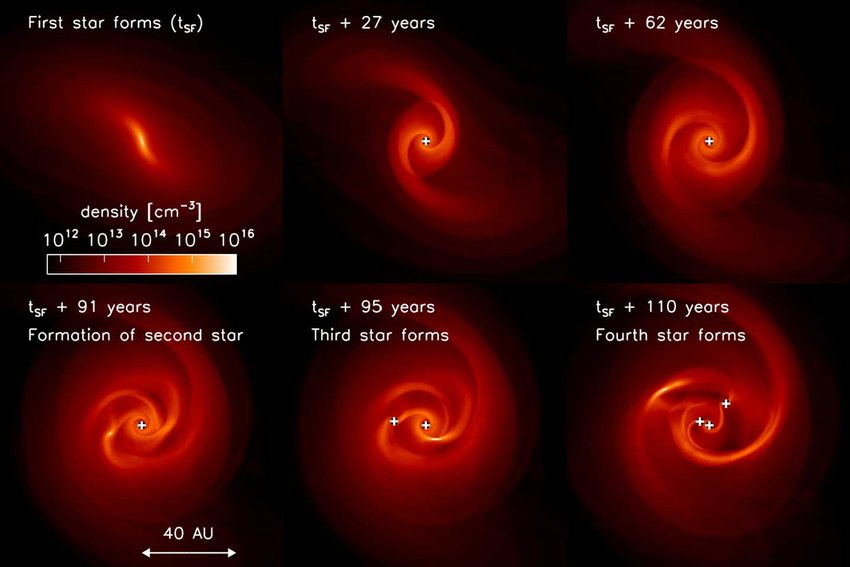
Along with the UV and X-Ray dispersal of the molecular cloud, other phenomena also contribute to the death of molecular clouds. Supernovae, the light-year-sized explosions of dying stars shoot out cosmic rays as well as their gas layers out at incredible speeds and high temperatures which, if close to a molecular cloud, have the potential to completely destroy it in an instant. Additionally, the continuous and high speed flow of charged particles from the surface of stars, a phenomenon called Stellar Winds (imagine stars blowing hot ions away from it like a constant wind), can also disperse molecular cloud material
Role in Stellar Formation
As you begin to read external sources regarding molecular clouds in academia or in competition tests, it will become commonplace to refer to molecular clouds by their alternate name: "Stellar Nurseries."
But what does this name even mean? Stellar Nurseries, intuitively, refer to the key function of molecular clouds in the formation of stars. Molecular clouds are the birthplace of stars, providing them with the material mass they need to form and that will become their hydrogen fuel, their protoplanetary disks, and their eventual planetary bodies. Additionally, the cold, 10 K temperatures offer the optimal environment for the onset of star formation because, as we will discuss in the next chapter, temperatures mark the barrier between the gravitational collapse of the molecular cloud and eventual condensing of molecular cloud regions into a burning star. Regarding the star-forming function of molecular clouds, we must be familiar with two criterion for its onset:
Jean’s Mass: This criterion is the minimum mass of a molecular cloud or molecular cloud region like a clump of core needed to support stellar formation via the most common mechanism of Gravitational Collapse. More specifically, Jean’s mass uses density and pressure to calculate a mass that just barely balances the force of gravity, and that when surpasses, will cause gravitational collapse. The Jean’s mass can be calculated in an equation that we will discuss in Module two.
Jean’s Length: This criterion is the critical radius of a cloud where thermal energy, which causes the cloud to expand, is counteracted by gravity, which causes the cloud to collapse into a star. Like Jean’s Mass, Jean’s Length also has a mathematical expression that we will explore further in Module Two.
The exceeding of either of these criterion will result in a phenomenon called Jean’s Instability, which is when the inner forces of radiation pressure are overcame by gravity, marking the start of Gravitational Collapse.
Lets close our discussion of molecular clouds and stellar formation with a few connections back to previous topics in molecular clouds. In stellar formation, the gaseous clumps, due to their high masses, condense to form star clusters, whereas their smaller gaseous cores condense to form single and binary pair stars. As discussed in the Structure & Chemistry subsection, Turbulence inside a molecular cloud can act to shape a molecular cloud’s internal structure. This same turbulence also has the power to condense regions of the molecular cloud in dense filaments past its Jean’s Length, start the process of stellar formation. And finally, as discussed in the chemistry subsection, molecular clouds form and contain stars with high metallicities, meaning that molecular clouds themselves have high metallicities as well. These high metallicities are a essential for stellar formation because the complex elemental composition promotes efficient cooling of the molecular cloud.
Giant Molecular Clouds
Giant Molecular Clouds, abbreviated as GMCs, are a specific type of molecular cloud that is over approximately 10,000 times the mass of the sun (typically 10,000x to 10,000,000x). Along with being significantly more massive than regular molecular clouds, they are also much larger: while most regular molecular clouds are 1 light year to 300 light years in diameter, Giant molecular clouds reach from 15 light years to over 600 light years in diameter. GMCs are also significantly denser than molecular clouds, most containing 10,000 particles per cm^3.
Giant molecular clouds have a unique structure. Internally, GMCs contain distinct patterns of cloud formations in filaments, sheets, bubbles, and irregular clouds. Filamentous structures overwhelmingly dominant the internal structures of GMCs, and these filaments are formed by the stronger magnetic field produced by the GMC due to its higher concentration of metal and ionic compounds. The shape of these filaments are also determined by the continuous accretion of gas by the GMC and geometrical bending of the larger cloud. The filaments of GMCs are important to our study of stellar formation because they contain very early forms of stars called protostellar cores, still undergoing gravitational collapse from their stage as a gaseous core in ISM.
Giant Molecular clouds, along with filamentous structures, contain another type of molecular cloud as an internal structure: Dense Molecular Cores (DMC), or more commonly, Bok Globules or Dark Nebulae. We will discuss Dense Molecular cores and Bok Globules in the following section.
Bok Globules
Bok Globules are a unique type of small molecular cloud that contains a highly compressed, highly dense mass of dust and heavy molecules in a tight radius. Bok Globules typically have densities of 10^4 to 10^6 particles per cm^3. The high densities of Bok Globules obscure all incoming visual light, and thus they appear as dark silhouettes in space. Because of their dense, light-obscuring nature, astronomers attempt to view in infrared wavelengths to see through the thick dust into the star formation underway inside.
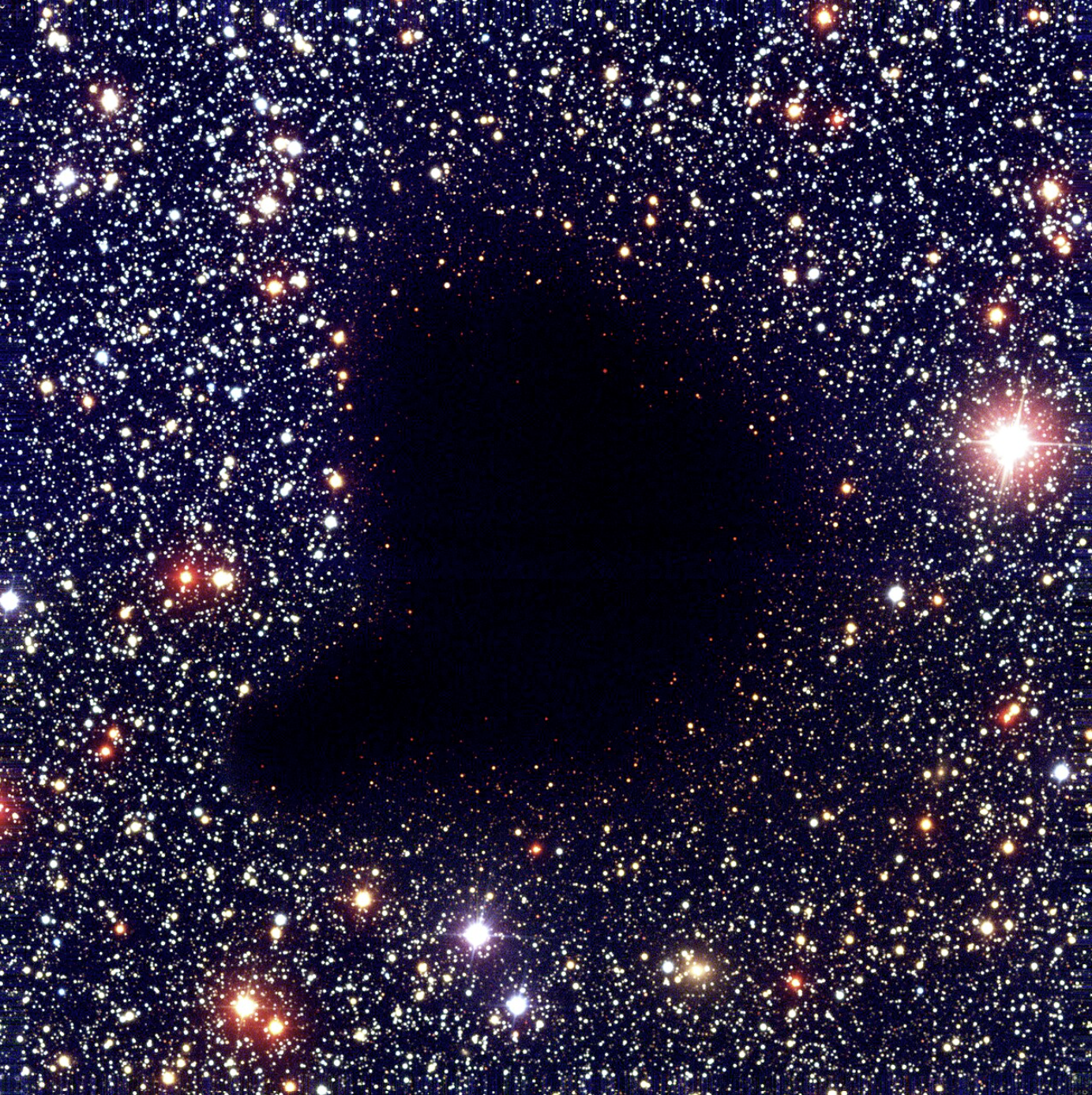
Bok Globules originate from compressed dust from HII regions and Molecular cloud clumps. That is why they are almost exclusively found within HII regions and Giant Molecular clouds. Bok Globules may vary in size, but more often then not take the size of a small molecular cloud of a diameter of approximately 1 light year.
Research and competitions in astronomy and astrophysics often bundle the Bok Globule molecular cloud type with another, very similar type called Dense Molecular Cores (DMCs). The two designations, while in this text we consider them the same, are slightly differentiated in their composition. Although their sizes, densities, and formation mechanisms remain the same, Bok Globules contain molecular hydrogen, carbon oxides (Carbon monoxide for example), helium, and 1 percent silica dust, while DMCs contain the same molecular hydrogen, helium, and carbon oxides, only now without the silica and with traces of ammonia, NH3.
HII Regions
HII regions are another type of molecular cloud, only this time instead of being cold and light-obscuring, HII regions are incredibly hot and highly luminous. HII regions are parts of a molecular cloud that contain high levels of star formation such that the young stars they proliferate provide light and heat radiation to the surrounding region. Thus, because of the high concentration of stars and star formation in this ISM cloud, HII regions are primarily made up of single and double ionized atomic hydrogen due to the widespread photoionization of the surrounding gas and dust particles. In fact, HII regions are comprised of approximately 90 percent atomic hydrogen, which when emitted releases distinct emissions lines. Most non-hydrogen matter is Helium with trace amounts of heavier elements.
The emission lines of Hydrogen that are observable in HII regions are an important and common topic on Scioly Astro exams. Here is what you need to know:
Halpha (AKA Balmer Series) Emission Lines: The Halpha emission line is the primary emission line of unionized hydrogen. The Halpha line occurs at a wavelength of 656.3 nm, which gives the HII region its red color (the Hbeta line also gives this red color, but at 1/3 intesity). What differentiates the Halpha line from the Lyman-alpha series is the electron transition. The Halpha line is caused by a electron transition from the n=3 to n=2 state in the hydrogen atom due to the single ionization.
Lyman-alpha Series Emission Lines (Ly-a): The lyman-alpha series emission line is the secondary emission line of hydrogen, occurring in singly ionized hydrogen. Thus, corresponding to its ionization state, the lyman-alpha series emission lines are caused by the electron transition from the n=2 to n=1 state. Note that the electron transition starts at the state that the Halpha line ends, signifying its ionization. As lyman-alpha series lines require a greater degree of ionization, they are often serve as evidence that a star has a binary companion.
Another important aspect of HII regions is their location and occurrence in our universe. HII regions are typically located inside of molecular clouds, right where stellar formation has just taken place. On a larger scale, HII regions are only found in spiral and irregular type galaxies (not in elliptical). Inside of spiral galaxies (think our Milky Way for example) HII regions are found most commonly in the Spiral arms of galaxies. This prevalence is because star formation is most common in spiral arms (due to the gravitational effects from the center of the galaxy that compress ISM), which leads to more ionization of the gas by the UV photons of OB stars, and therefore more HII regions.
The unique radiation and chemical environments in HII regions are often the center of many FRQs in Scioly Astro. HII regions are known to emit Bremsstrahlung radiation. Bremsstrahlung radiation is electromagnetic radiation produced by the deceleration of a charged particle (ex. an electron) when deflected by another charged particle, typically an electron by an atomic nucleus (singly ionized hydrogen in HII regions). This results in the moving particle losing its energy, which is then converted into photons for radiation emission. Another noteworthy component of the radiation environment of HII regions is the sheer abundance of UV radiation. Because of the rapid rates of star formation in HII regions, the short lived, hot, and blue OB stars are the primary sources for the ionization of HII regions. The high concentration of charged particles in HII regions is believed to be the source of the magnetic field of HII regions, which also has been hypothesized to suggest HII region electrical fields. Due to the prevalence of hot OB stars, HII regions reach temperatures as high as 10,000 K.
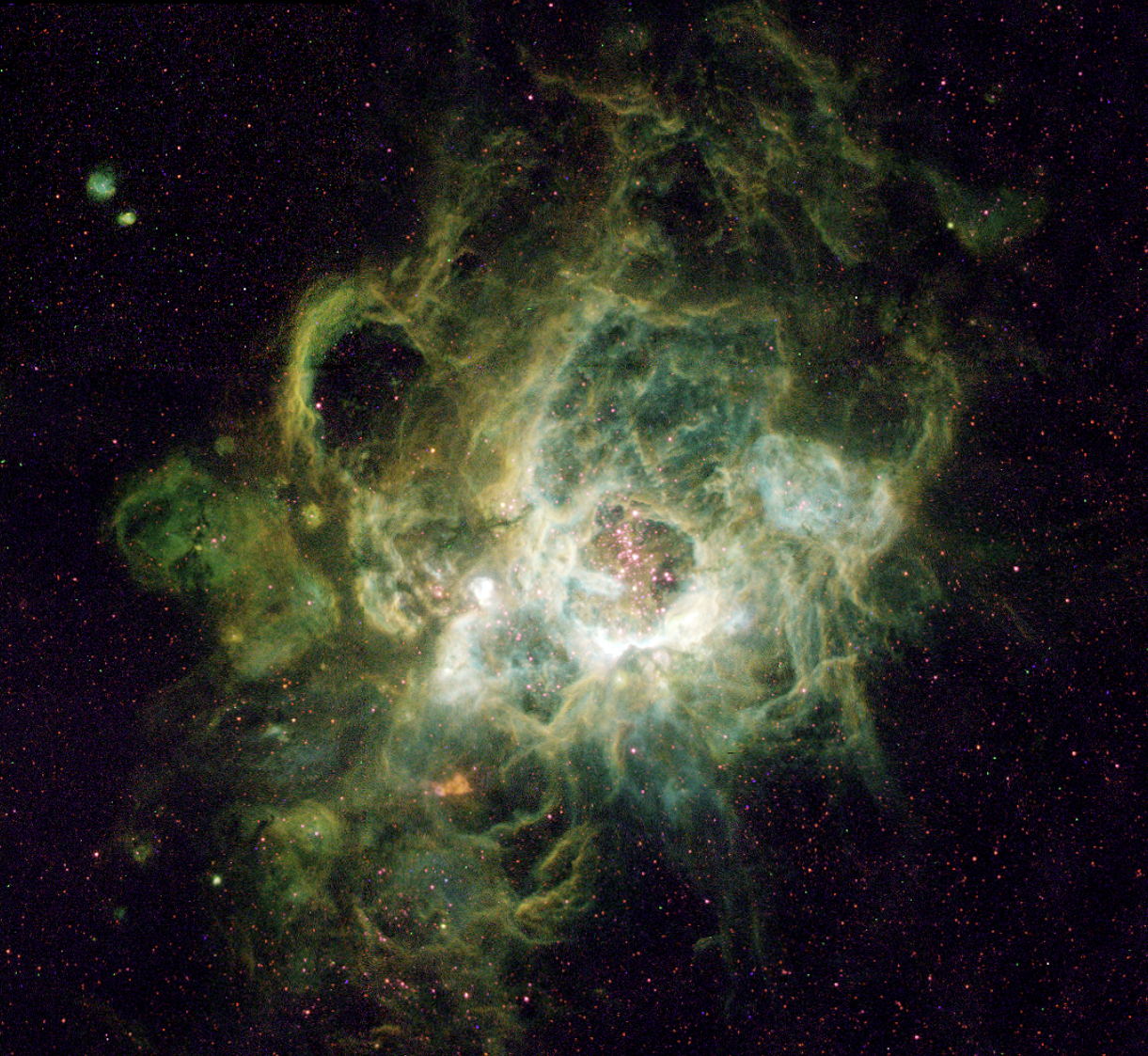
The external and internal structures of HII regions are also important to understanding their role in the universe. Having to sustain high levels of photoionization, which functions to disperse the cloud, requires a balance between the rate of ionization and an equally high rate of recombination. Without a sufficient balance, the structural integrity of the HII region will crumble and the HII region will disperse entirely. Like regular molecular clouds, this balance is tipped at the end of the lifetime the short lived OB stars inside, specifically when they explode in powerful supernovae events. HII regions are typically as large as small molecular clouds, ranging from 1 to 100 light years in diameter. The external shape of HII regions are carved by the stellar winds, ionization, and supernovae newly formed OB stars inside its gas and dust. OB stars inside HII regions typically ionize a certain radius of gas around them, typically in a sphere area called a Strömgren sphere. These Strömgren spheres comprise the majority of a HII regions internal structure, and their sizes (and thus the size of the HII region) are determined by the intensity of ionization of the source (which, in turn, is determined by the mass of the OB stars).
Previously, we established that HII regions are found embedded inside molecular clouds. However, while this remains true, HII regions are also often encased in another type of small molecular cloud called a HI region. While HI regions can exist separately, they are commonly found surronding the outer barriers of HII regions. More information on HI regions and their interactions with HII regions in the next paragraph and following section.
The growth of HII regions is determined by the interactions at the edges of its Strömgren spheres and thus the edges of HII regions themselves, called Expansion Fronts. The expansion of HII regions is supersonic (i.e. faster than the speed of sound in the region), creating a shock front that expands outward into the neutral material surrounding the HII region, known as the HI region, faster than the ionized front (the shock front being the outer surface of the HI region, and the ionized front being the outer surface of the HII region).
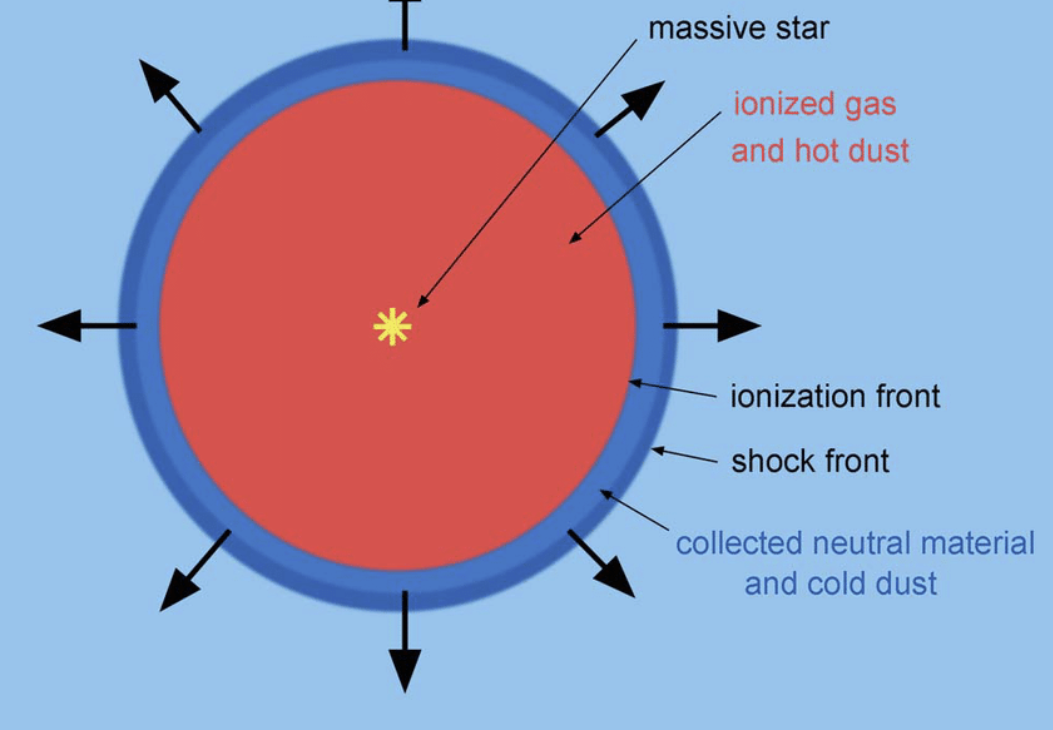
To visualize this, imagine a small bubble of red and glowing ionized gas. This bubble is surrounded by a larger bubble of blue, neutral gas. The space inside the blue bubble but not inside the red bubble is a dense HI region. The surface of the blue bubble is the shock front. The surface of the red bubble is the ionization front. As HII regions expand, because the shock front is supersonic, it shoots outward and then slows while the ionization front steadily increases.
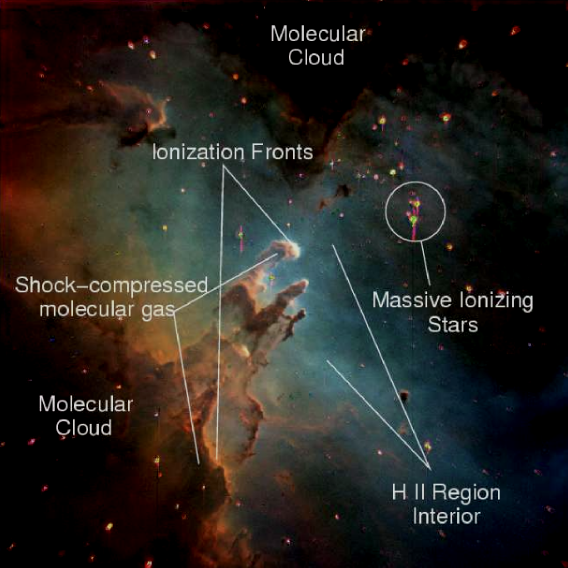
HI Regions
HI regions are a specific type of molecular cloud that contains primarily neutral hydrogen, Helium, and oxygen as gas particles. They are significantly less dense than their sister HII regions: HI regions typically have densities of approximately 1 atom/cm^3. The density of HI regions are too low for hydrogen molecules to form, so they remain in atomic form (differentiating them from molecular clouds).
Unlike the hot 10,000 K temperatures of HII regions and the cold 10 K temperatures of regular molecular clouds, HI regions maintain a relatively stable 100 K at all times. HI regions are able to reach this stable state via this simple mechanism:
One of the most important identifiable characteristics of HI regions is that they are Isothermal. In order to explain what Isothermal means, though, we must introduce the 4 different types of chemical processes in relation to pressure, temperature, volume, and pressure (trust me this will come in handy soon):
Adiabatic: Adiabatic processes are those that occur with no heat transfer between the system and its surroundings.
Isothermal: Isothermal processes are those that occur at a constant temperature. This means that the total net energy is equal to zero and that all heat/energy added to the system must be compensated with an equal amount of heat/energy leaving the system. For example, as introduced before in early Chapter 1, temperature equilibrium occurs when the radiation absorbed by a body and the radiation emitted by a body are equal, thus making temperature equilibrium a Isothermal state.
Isobaric: An isobaric process is a process that occurs under constant pressure. This environment is rarely considered in the context of interstellar medium, and typically is studied in closed, laboratory settings, deep, open space, or stable planet atmospheres.
Isochoric: Isochoric processes are those that occur at constant volume. If a process is isochoric, that also means that no work can be done on the system. Energy can thus be only added or removed in the form of heat.
As HI regions maintain a constant temperature of 100 K by balancing the heating of its gas by incoming radiation with the cooling effect from recombination, HI regions are thus known to be Isothermic. One exception to this isothermal state is near the shock and ionization fronts of the HI region, where heat exchnage is not balanced and thus the region expands. Classifying certain ISM scenarios as one of these 4 processes is an important skill to have when tackling Scioly Astro FRQ.
Because HI regions, like regular molecular clouds, contain neutral atomic hydrogen, they too can be identified by the 21 cm (1420 MHz frequency) radio spectral line. A neat little trick to remembering the contents of HI and HII is to quickly memorize the notation for the ionization state of a hydrogen atom. A single "I" next to a Hydrogen, H, shows like so, "HI" signifies the neutral state, whereas by ionizing neutral hydrogen to become singly ionized hydrogen, we add another "I" to the notation to signify the change in energy state, like so: "HII."
The study of HI regions has become increasingly important in recent year due to their use in the investigating the structure and movement of galaxies. Astronomers map HI regions in our galaxy and other galaxies for 3 distinct purposes that you need to remember for your next Scioly test:
To determine the structure of spiral galaxies
To map gravitational disruptions between galaxies
To map galaxy collisions.
Please be wary that in order to map HI regions, astronomers need to view in specifically the radio region of the electromagnetic spectrum (think 21 cm line). This is an important distinction between using infrared or near-infrared wavelengths to see through and inside ISM. Here we use radio to map the physicality, not the internal features, of the HI region.